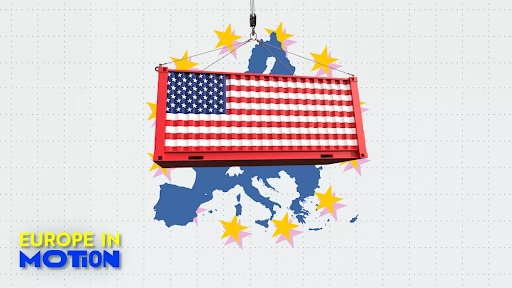


As the US. President Donald Trump makes a strong political comeback and asserts his influence on the Republican Party, many Canadians are increasingly worried about their country’s sovereignty and the possibility that the strong “America First” sentiment at the border might pressure Canada into becoming the 51st state (Chase, 2021). While the idea of becoming the 51st state is certainly exaggerated, it reflects Canada’s political anxiety stemming from Trump’s first term, during which the President threatened the nation with tariffs and consistently tested their relations.
Present Effects of Past Policies
Trump’s first presidency had a significant impact on Canada. The transition from the North American Free Trade Agreement (NAFTA) to the US-Mexico-Canada Agreement (USMCA) led Canada to face various trade-offs, particularly in the dairy and automotive industries. Furthermore, Trump imposed strong tariffs on aluminum and steel, leading many Canadians to question how heavily their economy depends on Washington.
Although Joe Biden’s term took a different approach to strengthening bilateral relations, Trump reelection instead brings great fear among Canadian policymakers. Officials’ fears regarding a possible trade showdown or unilateral policy shifts with Trump’s rise to power are not hypothetical: significant sectors of the Canadian economy rely on exports to the US, and if Washington adopts a more protectionist turn, all of Canada’s provinces will face the consequences.
Domestic Political Ripples
Prior to the end of his term, Prime Minister Justin Trudeau’s government had intensified its efforts to diversify trade partners, signing agreements with Europe and Indo-Pacific regions as a reaction to Trump’s talks. Politically, neither ruling party in Ottawa can afford to be complacent regarding the American market due to the constant threat of abrupt changes in US policy. Opposition leaders, however, make use of Trump’s strategies to support their claims that Canada needs to protect its sovereignty. While left-leaning parties claim that Canada must “stand firm” in upholding its social and environmental norms, conservative politicians may accuse the ruling Liberals of failing to preserve national interests. As a result, discussions regarding Canadian autonomy have become more prominent – something that was uncommon before Trump gained office.
Energy and Defense Implications
Another major stressor for Canada is the impact on its energy sector. While Canada has committed to reduce its carbon emissions, it still heavily relies on exporting oil to the US. They are already exporting oil, which may mean that with Trump’s presidency, there would be an increase in extraction of concessions from nearly everything, such as dairy quotas and pharmaceuticals. Furthermore, Trump repeatedly strengthened his stance that NATO members must “pay their fair share”, which has also created friction in Ottawa, as Canada may once again face demands for increased military spending.
Public Perceptions and the “51st State” Debate
So what does the public think about all this? Public opinion polls have concluded that Canadians are proud of their distinct identity, being an overall prideful country. They avidly support universal healthcare, stricter gun laws, and a strong social safety net. However, whenever the ‘51st state’ debate arises, Canadians feel sidelined and overshadowed by their neighbour, with Canada’s concerns often being concealed by the strong headlines of US politics.
Looking Ahead
Currently, no one believes that Canada will ever become an actual American state, yet concerns remain about Washington’s external influence and the extent to which Trump’s actions actually go. With Trump’s return to office, Canada must be vigilant in protecting its sovereignty. Therefore, Ottawa’s stronger ties with Europe and Asia and decreased dependence from the US is prudent. Renewed pressures will inevitably rise, making it vital for Canada to remain strong.
Views of this article