

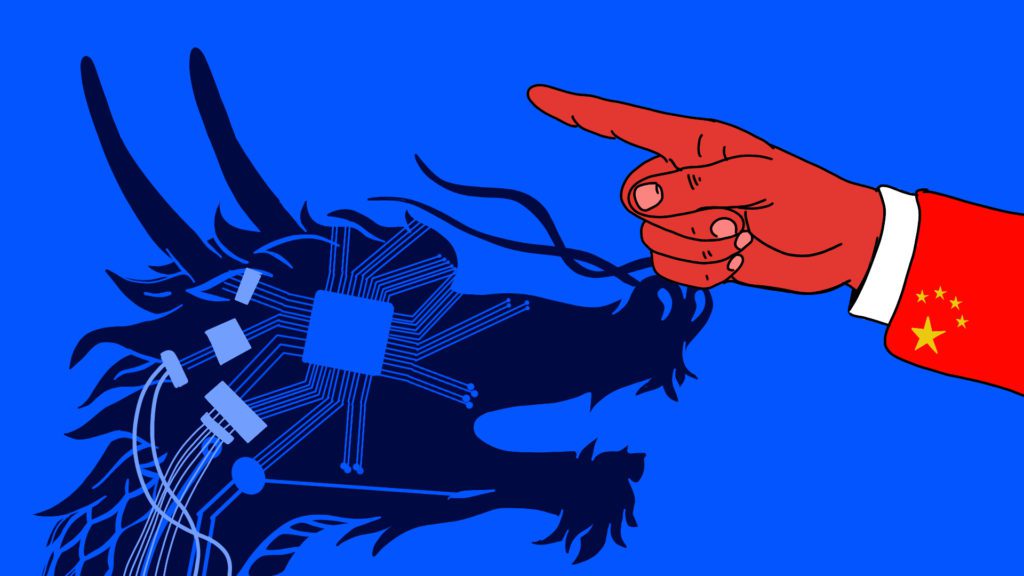
China is using regulators to make reforms in both its economy and society. With one of the largest economies, any economic decisions made by China will affect the flow of billions of dollars. The country influences the operations of a vast number of companies, from tech giants to education systems. Their decisions affect these big companies on the surface as well as people in the smallest communities. Their actions intend to protect their people by implementing digital safeguards, combating monopolies, and cracking down on other illicit activities. Whatever their intentions are, the reality is that many are struggling to adapt to the shift and modern culture is experiencing a setback.
The first target of the Chinese initiative was Jack Ma’s company, Alibaba, which faced an 18.2 billion yuan fine. What caused the sudden hostility toward one of the wealthiest entrepreneurs in the nation? It seems the public holds some resentment towards the affluent, as is the case with most countries exhibiting wage disparity. The Chinese government is eager to exploit these feelings and use them as motivation to crack down on businesses like Jack Ma’s Alibaba and Ant.
Xi Jinping has openly stated his desire to prevent the disorderly expansion of capital.
In essence, China seeks to gain more control over the economy and set new precedents for business operations. Jack Ma allowed his company to abuse its leverage over smaller organizations, and Chinese regulators took a firm stance against the monopoly. China aims to make it easier for new companies to enter the sector and to ensure that platform exclusive operations are not enforced by the tech giants. Alibaba is not alone in the ridicule either. Tencent, Wechat, and Weibo are other major platforms that are affected by the crackdown. While the government justifies its actions against these companies, they are nonetheless pleased for the opportunity to punish rebellious behaviours exhibited by people like Jack Ma.
Following the push against tech giants, China implemented a series of safeguards and restrictions regarding internet and social media usage. The changes are to protect children from harmful exposure (i.e. cyberbullying and CSAM) and technology addictions. They went as far as to limit video game usage to three hours a week for underaged children. The excessive restriction hints at the suppression of non-party supporting pop culture trends. After a certain degree, China’s actions become visibly controlling, especially regarding their youth generation. Social media accounts that express ideals contrary to the state are taken down. Groups influenced by Korean and western views stand a higher chance of being scrutinized.
Xi’s intention with maintaining patriotism within the pop culture sectors has been evident for years. In 2014, he expressed his belief that “the arts must serve the people and serve socialism.” Implementing new regulations and safeguards is not inherently nefarious, but when there is a pattern of certain ideologies being discouraged, there is a clear problem at hand.
In addition to cracking down on big tech, there has been evidence of China’s interference with educational organizations and practices. China is reforming the private education sector and preventing companies from offering tutoring services. With increasingly expensive costs, families struggled to afford to keep their children what they considered competitively educated. Cutting these options from the public might allow families to make affordable decisions without their children falling behind, but this will be a temporary solution at best.
China must make an effort to reform the public school system for its reforms to have positive effects. As it stands, those set on receiving private education will still find ways to do so. China needs to address disparities in the education system and create an environment worth investing the child’s time in. The more effective and equitable their public systems are, the less private education and the more agreeable their reforms are.
China shows no desire to slow its crackdown on business nor their reforms in society. Currently, it is difficult to determine if Chinese citizens will benefit at all from these reforms. While some initiatives eliminate immoral behaviour, they might at the same time constrict society to state-approved ideals.
China prefers to maintain its monopoly over its people.
Views of this article



When was the last time you stopped to wonder if something you wore, said, or did might offend someone from